24 Chinese Feasts (Jiéqì, 节气), equivalent to the 24 Chinese Solar Terms: Year 2024
 Amusing: Calculate the 24 Chinese Solar Terms of a Country/Territory
  Previous Years | Default | | Gregorian | Chinese | Next Years...
Here is the 24 Chinese Feasts (Jiéqì, 节气), equivalent to the 24 Chinese Solar Terms for the year 2024.
If you want also the dates of these Chinese feasts on the Chinese Lunar Calendar, here is the link (a slow process) : Detail
Know more about the Chinese Calendar...What is the Chinese Lunar Calendar ?
The Chinese Calendar is a solilunar calendar. It integrates as well the revolution of the Earth around the Sun as the movement of the Moon around the Earth.
A month begins at the day of the new moon (invisible Moon) and ends at the day before the next new moon. The full moon is either on 15 or 16 of the month.
A Chinese year can have 12 or 13 lunar months, that correspond to the nomber of new moons between two successive winter solstices. The year is appelé leap year if there are 13 months in the year.
If a Chinese year always starts on the 1st month 1, the date marking the beginning of the Chinese New Year in the Gregorian calendar is variable between January and March according to relative position of the Sun - Moon.
Here is the Chinese Calendar of my maternal grand father.
Year in the Chinese Lunar Calendar
A Chinese Year (Suì, 岁) is composed of 4 seasons: Spring, Summer, Autumn and Winter, and sub-divised in 24 Chinese Feasts, equivalent to the 24 Chinese Solar Terms of a Chinese Year. The major solar terms Zhōngqì (中气) are given in boldface, while the minor solar terms Jiéqì (节气) are given in lightface.As these solar terms are only events of the Sun, no lunar event related feasts, such as Chinese New Year which is the day of the first new Moon (day 1 of month 1 of a Chinese lunar year), Dragon Feast (day 5 of month 5 of a Chinese lunar year), are in the list.
Since the creation of the People's Republic of China on October 1st 1949 by the President MAO Zedong (Mao Tsetong), China has officially adopted the Gregorian calendar, or the solar calendar for the administration purpose. Nevertheless, the Chinese People keep their traditional feasts fixed on the dates of the Chinese Lunar Calendar. These feasts are very vivid today such as the Spring Festivities, symbol of the arrival of the Chinese New Year.
The Spring Festival takes place always on the first day of the first month on the Chinese Lunar Calendar. But the date on the solar calendar varies with the year. Il is always on January or February of the current year on the solar calendar, but its date can be obtained only by a very complex calculation of the dual movement of the Earth and of the Moon.
In the Ancient Chinese History of 24 dynasties, the time has neither beginning, nor ending. Each dynasty hopes an infinite reign on time and each emperor starts counting by his first year of reign as year 1. For example, the Emperor KangXi of the Qing Dynasty counts his reign by KangXi year 1, KangXi year 2, KangXi year 3, ...
Nowadays, the Chinese have officially the Gregorian year. This is to say, the year 2024 for this year. But as the Yellow Emperor (Huangdi) is considered as the Creator of the Chinese Nation, the population count also as Huangdi 4722 for this year.
To know more about chinese feasts of the 4 seasons related to the chinese calendar,
the chinese lunar calendar of my grand father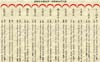 would be a precious help.